Written by Gal Wollach, VP Business Development, Palram 4U
In our last Knowledge Center article, we looked at the engineering behind a fixture: manufacturability, modularity, and total cost of ownership. That’s the part of the fixture most people never see.
This article is about the part everyone sees.
Every retail fixture has three sets of users. Shoppers decide in seconds whether to stop and pick something up. Store associates restock, clean, and reset it dozens of times a week. And eventually, someone has to decide what happens to it when its working life is over.
A fixture that works for all three sells more, costs less to run, and leaves less behind. Here are seven good practices we apply at Palram 4U.
1. Design for the three-second glance
Most shoppers don’t read a display. They scan it. If the product and the message aren’t clear in a few seconds, the moment is gone.
Good practice includes:
- Placing hero products and best sellers at eye level, where they get the most attention
- Keeping headers short, high, and visible from the aisle, not only from directly in front
- Designing shelves and trays so products face forward, with labels visible
- Avoiding structural elements that block sightlines, such as thick frames, deep lips, or oversized branding
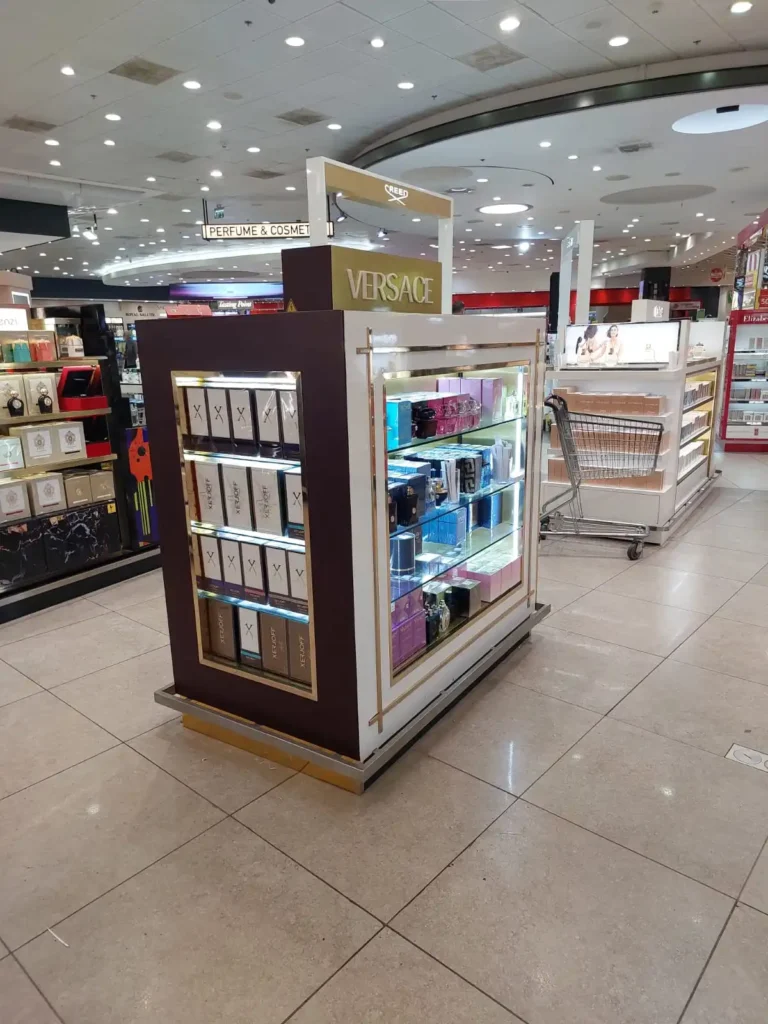
A simple test: stand where shoppers actually approach from, not where the rendering was drawn from. If the product isn’t the first thing you see, the design needs another pass.
2. Light the product, not the shopper’s eyes
Lighting is one of the most effective sales tools on a fixture, and one of the easiest to get wrong.
Well-integrated lighting should:
- Illuminate the product evenly, without hot spots or dark back corners
- Use a color temperature suited to the category: warmer light makes baked goods look fresh and appetizing, while cosmetics need accurate, neutral light so shades look true
- Hide the LED source behind diffusers or profiles, so shoppers see a glowing product, not a glaring strip
- Route power and cables inside the structure, with easy access for service
Lighting added after the fact usually shows it. Planned from the first sketch, it becomes part of the product presentation rather than an accessory bolted onto it.
3. Respect the reach zone
If a shopper has to stretch, bend, or reach behind other products, many simply won’t.
Good fixture design considers:
- Keeping high-velocity items between waist and shoulder height
- Limiting shelf depth, so products at the back are still easy to grab
- Making countertop units low enough that they don’t block the checkout conversation
- Meeting accessibility requirements for reach ranges and clear floor space; in the US, ADA guidelines are the starting point
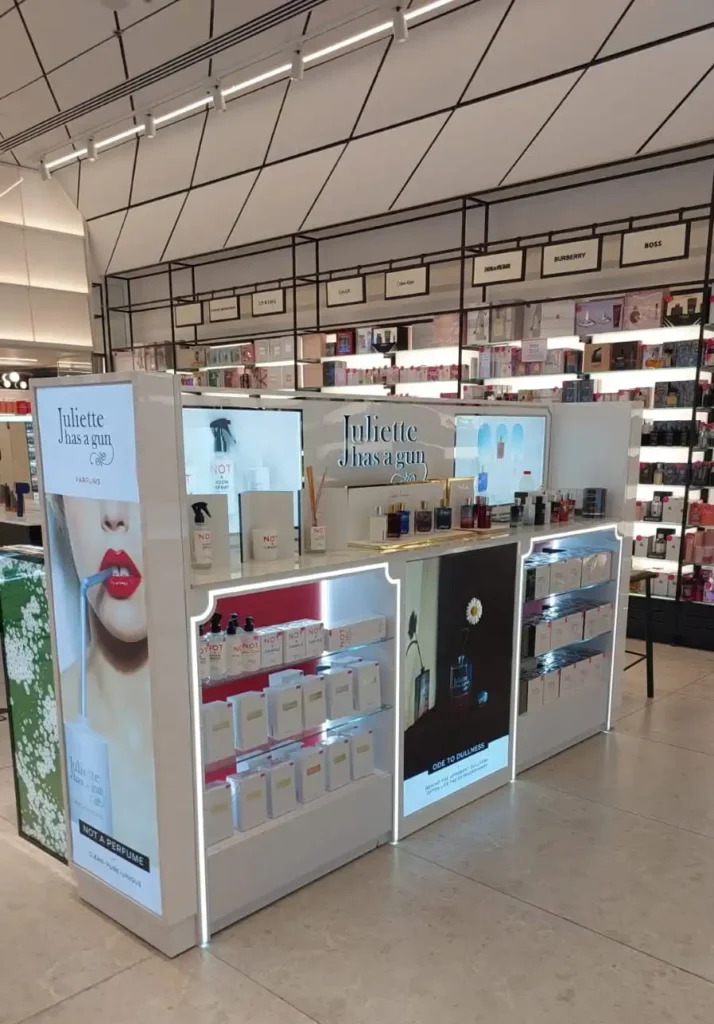
The easier a product is to reach, the more often it ends up in the basket.
4. Make restocking fast
Shoppers see a fixture for seconds. Store associates live with it every shift.
With rising labor costs, every extra minute spent refilling, facing, or fixing a display is a real operating expense. Good practice includes:
- Front-loading or top-loading, so products can be restocked without removing the whole row
- Pusher or gravity-feed systems that keep products faced automatically
- Clearly defined lanes or compartments, so any team member can restock correctly
- First-in, first-out (FIFO) flow for perishable categories such as bakery
- Tool-free adjustment of shelves and dividers for planogram changes
A fixture that stays full and neat on its own also looks better at 6 p.m., not just at opening time.
5. Build cleanability into the design
For food categories, hygiene is not a finishing touch. It’s a design requirement.
In self-serve bakery and other food displays, look for:
- Smooth, nonporous surfaces that wipe clean easily
- Rounded internal corners, with no gaps where crumbs and residue collect
- Removable trays and inserts that can be washed separately
- Hinged or sliding lids that protect products while remaining easy for shoppers to open
- Materials and construction that meet the food-safety requirements that apply in your market
Even outside food, cleanability matters. A display that is hard to clean usually stops being cleaned, and shoppers notice.
6. Plan for stability and security
A retail floor is a demanding environment. Fixtures get leaned on, bumped by carts, and loaded with more product than the planogram intended.
Good practice includes:
- Keeping the center of gravity low, with weight in the base
- Anti-tip features or wall anchoring for tall units
- Joints and connections designed for the real load, not just the nominal one
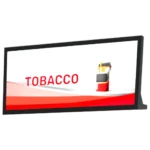
- Controlled access for high-value or age-restricted products, such as tobacco behind the counter
- Lockable compartments for electronics, drivers, and power supplies

Safety is rarely the reason a fixture is chosen. It’s often the reason a fixture is removed.
7. Design for the end of the fixture’s life
Every fixture will eventually be replaced. The question is whether it becomes a resource or a disposal problem.
Designing for end of life means:
- Using mechanical fasteners instead of permanent adhesives, so materials can be separated
- Choosing fewer material types, and keeping single-material parts where possible
- Marking plastic components to make sorting and recycling easier
- Making key parts replaceable, so a damaged shelf doesn’t send the whole unit to the dumpster
- Considering recycled or recyclable materials where performance allows
For many retailers and brands, this is no longer only an environmental question. It’s part of their sustainability reporting and supplier evaluation.
A quick checklist for your next fixture project
| Question to ask | Why it matters |
| Is the product the first thing a shopper sees from the aisle? | Visibility drives stopping power |
| Is the lighting integrated and suited to the category? | Lighting shapes how fresh, premium, or accurate products look |
| Can best sellers be reached without stretching or bending? | Easy access increases conversion |
| How long does a full restock take? | Labor is a recurring cost in every store |
| Can every surface be cleaned in minutes? | Hygiene protects both shoppers and brand trust |
| Is the unit stable under real-world loads? | Safety issues can remove a fixture from the floor |
| Can the materials be separated at end of life? | Circularity supports sustainability goals |
How Palram 4U applies these practices
Palram 4U has designed and manufactured retail displays for more than three decades, with over 1.7 million displays sold worldwide across tobacco, cosmetics, health and beauty, grocery, convenience, and general retail.
A few examples of how these practices show up in our work:
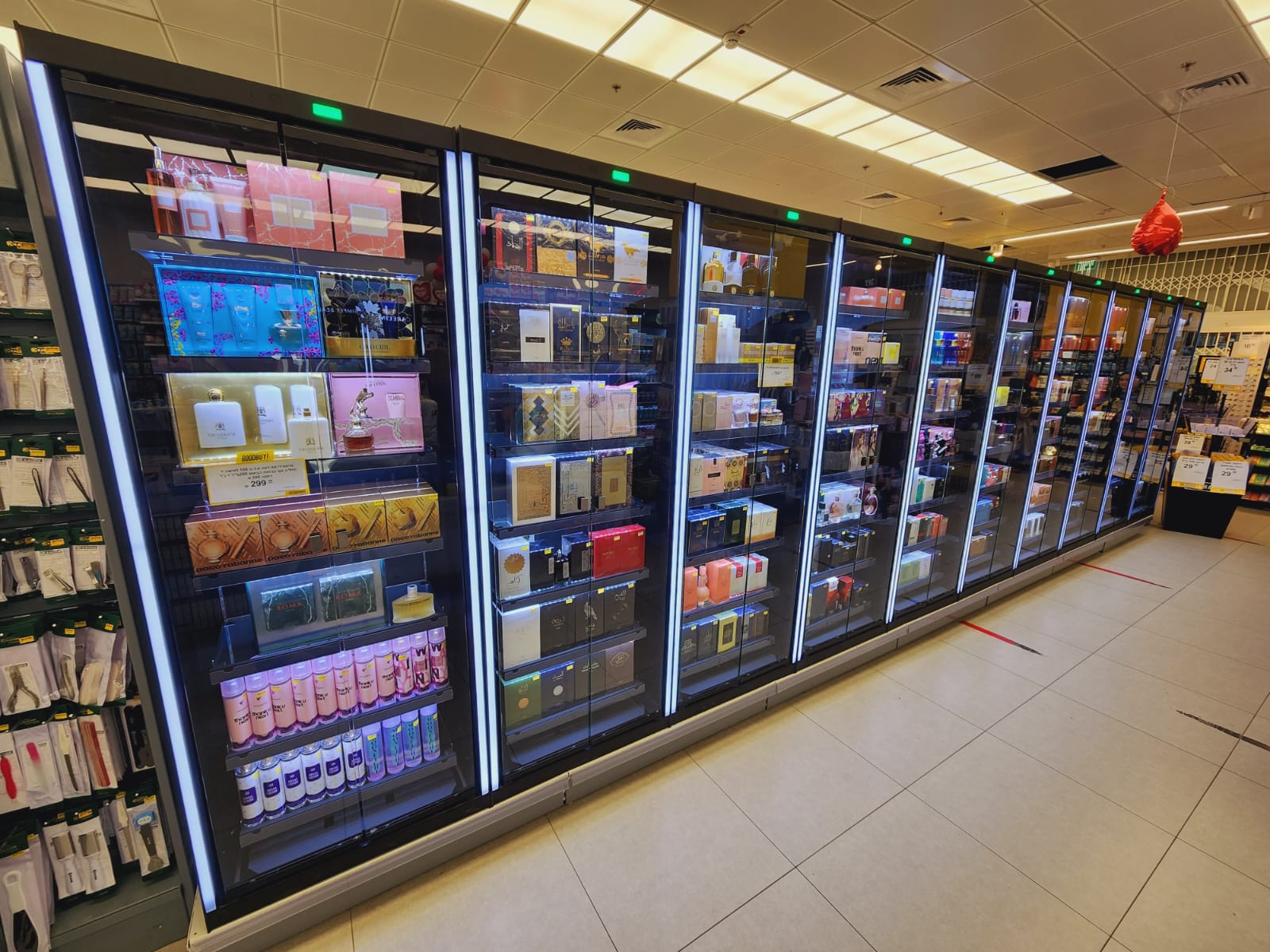
- Lighting as a core competency: Illuminated displays are a signature of our work, from cosmetics counters to c-store shelving and tobacco back bars.
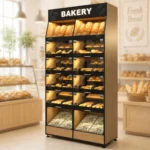
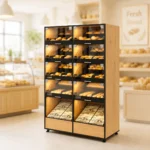
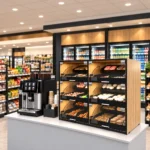
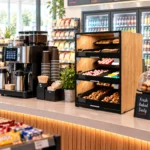
- Self-serve bakery displays: Designed for visibility, easy shopper access, and fast cleaning. Retailers using them have reported significant sales growth in their bakery sections.
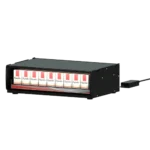
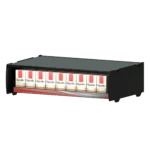
- FLEXRACK™ tobacco systems: Stackable, illuminated units that let stores build the back bar they need and adjust it as their assortment changes.
- Sustainability in production: Less than 1% of our POSM post-production materials go to landfill, many components are designed to be disassembled for recycling, and Palram 4U received EcoVadis recognition in 2024.
- Material expertise: As part of Palram Industries, we select materials for strength, clarity, weight, and cleanability, not just appearance.
Explore our ready-to-ship bakery displays and tobacco fixtures, or talk to us about a custom program.
A retail fixture must do more than look good when it is installed. It must keep working after thousands of customers, hundreds of restocks, and more than a few planogram changes.
Frequently asked questions
What makes a retail fixture design effective?
An effective fixture makes products easy to see, easy to reach, and easy to maintain. It should look good on day one and still perform after months of restocking, cleaning, and planogram changes.
How does lighting affect retail display sales?
Lighting draws attention and shapes how products are perceived. Even, well-directed light with the right color temperature makes products look fresher, more premium, or more accurate in color, depending on the category.
How can fixture design reduce store labor?
Front-loading, pusher or gravity-feed systems, clearly defined lanes, and tool-free adjustments all reduce the time associates spend restocking and facing products.
What should food displays include for hygiene?
Smooth, nonporous surfaces, rounded corners, removable trays, and protective lids that are still easy for shoppers to open. Always check the food-safety requirements that apply in your market.
What is design for disassembly?
It’s an approach that makes it easy to separate a fixture’s materials at the end of its life, using mechanical fasteners, fewer material types, and marked components, so more of it can be reused or recycled.
Design for the whole life of the fixture
A fixture is not finished when it leaves the factory. It’s finished when it has spent years attracting shoppers, supporting store teams, and, eventually, returning its materials to use.
Design for all three, and the fixture keeps paying for itself long after installation day.